INACCESSIBLE_BOOT_DEVICE (stop code 0x0000007B) means Windows started loading but then lost access to the drive it boots from. The boot loader found Windows, but once Windows' own storage drivers took over, they couldn't read the system drive.
That points to a short list: a storage setting that changed, a missing or broken storage driver, a failing drive, or file-system damage.
Before You Change Anything
Don't run "Reset this PC" or reinstall. If the drive is failing, you risk your data. If the cause is a BIOS setting, a reinstall isn't needed at all.
Think about what changed: a BIOS update or reset, a new or cloned drive, a Windows update, a storage driver change.
If the PC uses BitLocker, find your recovery key at aka.ms/myrecoverykey before you start.
Confirm You Have This Problem
The blue screen appears during startup and says "Stop code: INACCESSIBLE_BOOT_DEVICE."
It often ends in a loop: crash → "Preparing Automatic Repair" → crash again.
Possible Causes
| Cause | Clue |
|---|---|
| BIOS storage mode changed (AHCI ↔ RAID/Intel RST/VMD) | BIOS was updated or reset to defaults |
| Bad Windows update | Started right after updates installed |
| Drive cloned or moved to a new PC | Happened right after cloning |
| Loose or failing drive | Drive missing or intermittent in the BIOS |
| File system corruption | Improper shutdown or power loss beforehand |
Step-by-Step Diagnostic (Lowest Risk First)
Step 1: Check the drive in the BIOS
Enter the BIOS/UEFI setup (usually F2, Del or F10 at power-on). Confirm the system drive is listed. If it's missing, power off and reseat the drive's cable or the M.2 SSD. If it still doesn't show up, the drive or its connection has failed.
Step 2: Check the storage mode (the most common fix)
In the BIOS, find the SATA mode / storage configuration setting. It may be labeled AHCI, RAID, Intel RST Premium, or VMD controller.
If a BIOS update or "Load Defaults" changed this setting, Windows no longer has the driver it expects. Set it back to what it was, save and restart. On many laptops with 11th-gen Intel or newer, the original setting is VMD enabled or RAID/RST. Many desktops use AHCI.
Not sure? Try the other option. This is safe as long as you don't let Windows attempt repairs in between.
Step 3: Uninstall the latest update
From the blue Recovery screen, go to Troubleshoot → Advanced options → Uninstall Updates. Try Uninstall latest quality update first, then feature update if that doesn't help.
Step 4: Revert pending update actions
If an update was half-installed, open Troubleshoot → Advanced options → Command Prompt. Find your Windows drive letter first, because it's often not C: in recovery:
diskpart
list volume
exit
Then, replacing D: with your Windows drive letter:
dism /image:D:\ /cleanup-image /revertpendingactionsStep 5: Repair the file system
From the same Command Prompt:
chkdsk D: /f(Use your Windows drive letter.) If chkdsk reports bad sectors, stop and focus on getting your data off the drive.
Step 6: Run Startup Repair
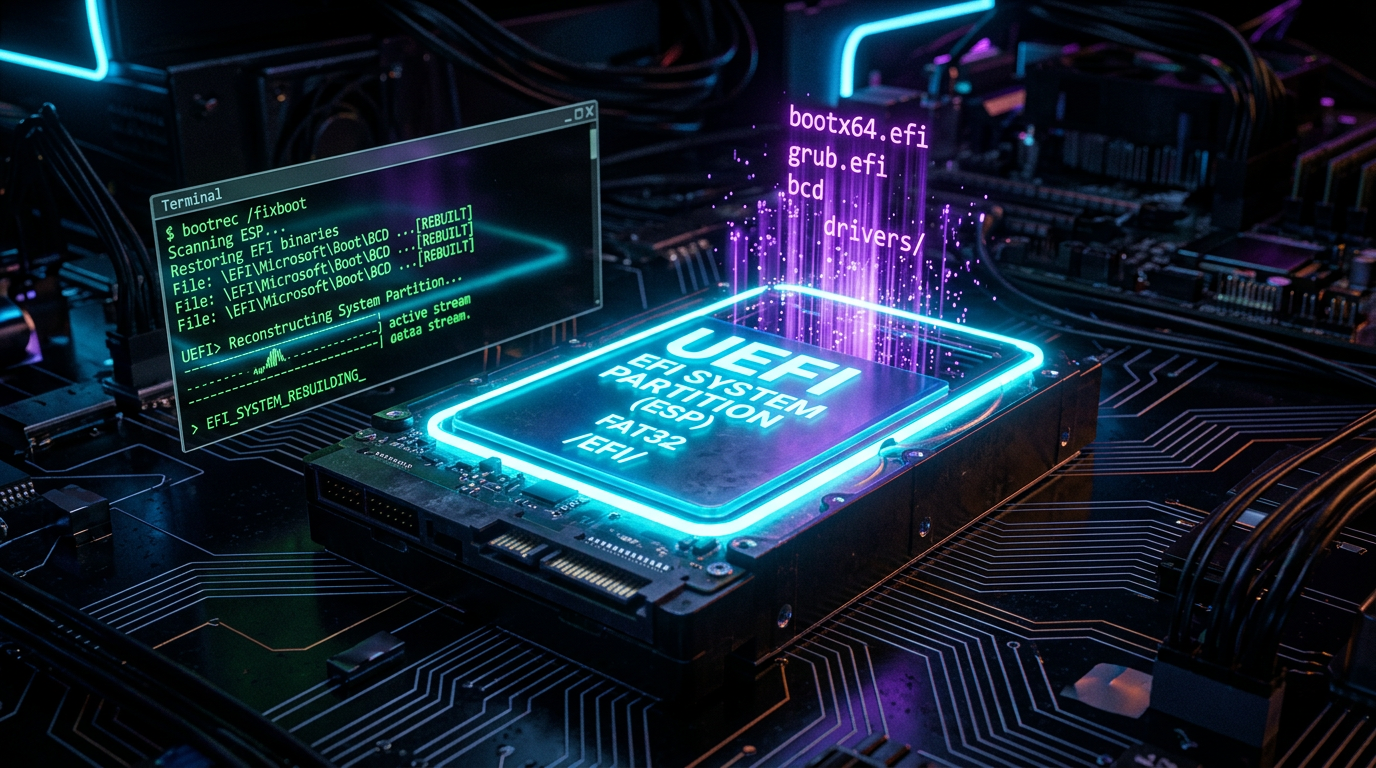
Troubleshoot → Advanced options → Startup Repair. It's less effective for this error than the steps above, but it's quick and safe.
Step 7: In-place repair after recovering access
Once Windows boots, run DISM /Online /Cleanup-Image /RestoreHealth and sfc /scannow. If problems remain, do an in-place repair upgrade with Keep personal files and apps.
Switching to AHCI on Purpose? Do It the Safe Way
Never just flip the BIOS setting from RAID/IDE to AHCI. That causes this error. From inside a working Windows, run as admin:
bcdedit /set {current} safeboot minimalRestart, change the setting to AHCI in the BIOS, and boot. Windows starts in Safe Mode and loads the AHCI driver. Then run:
bcdedit /deletevalue {current} safebootand restart normally.
How to Know It's Fixed
Windows boots normally several times in a row, including after a full shutdown.
No new disk or Ntfs errors in Event Viewer → System.
Drive health shows Healthy in the maker's tool or CrystalDiskInfo.
When to Stop and Get Help
The drive isn't detected in the BIOS, or chkdsk finds bad sectors. Prioritize data recovery.
BitLocker asks for a key you can't find.
Nothing above helps and the drive is healthy. A repair install or professional help is the next step.
A Help Desk Perspective
I've lost count of how many "my PC won't boot after a BIOS update" calls turned out to be the storage mode quietly resetting from RAID/VMD to AHCI. One setting, changed back, and the PC boots as if nothing happened. That's why Step 2 comes before anything that writes to the drive.
Found this helpful?
Share it with someone who could use it.
DiagnoseMyPC Team
Expert PC diagnostics and troubleshooting guides to help you keep your Windows system running smoothly.
Get the free Windows Troubleshooting Checklist
Subscribe and instantly download our 50-point Windows troubleshooting checklist — plus practical fixes, performance tips, and security alerts from the DiagnoseMyPC team.
No spam. Unsubscribe anytime.
Frequently Asked Questions
Does INACCESSIBLE_BOOT_DEVICE mean my SSD is dead?
Not usually. A changed BIOS storage setting, a bad update or file-system damage are more common. Check the BIOS first.
Will I lose my files?
Not from the steps in this guide. Avoid Reset this PC and reinstalling until you know the drive is healthy and your files are backed up.
Why did it start after a BIOS update?
BIOS updates can reset the storage mode to its default. If Windows was installed in RAID/VMD mode and the BIOS switches to AHCI (or the other way around), Windows can't load the right driver.
Can I fix it without a USB installer?
Usually, yes. Every step above uses the built-in Recovery Environment, which appears after a couple of failed boots.